
Activity Isn't Revenue
andy ward • March 17, 2026
New Paragraph
News & Blog
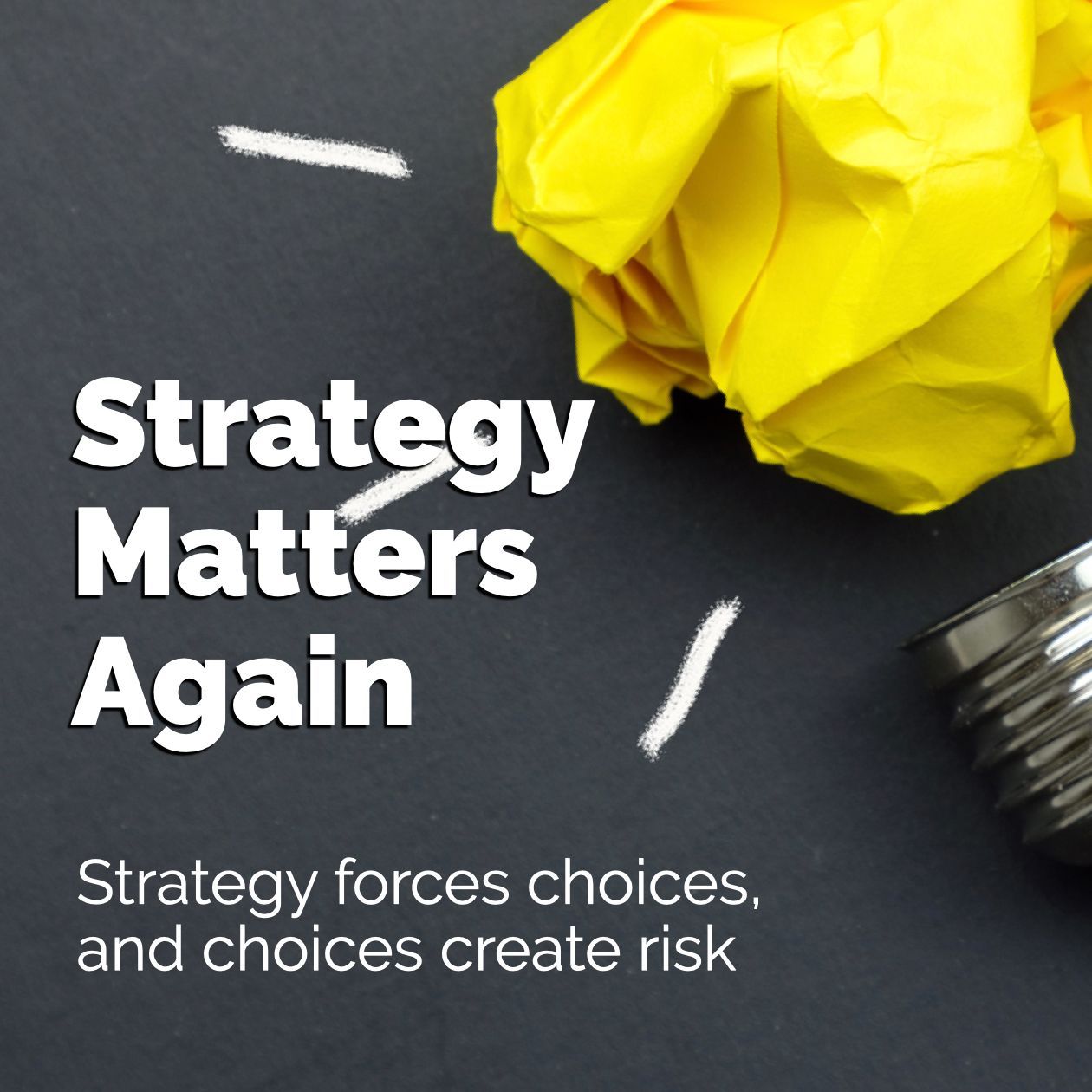
For years, marketing has been driven by execution…channels, formats, tactics. Strategy became… sort of optional? That era is over Because when production becomes commoditised, the only thing left that matters is What are you trying to say? We’re moving from activity to intent, from output to direction and from channels to narrative. The problem for agencies is that most are built to deliver, not to decide, and there’s a big difference. What clients actually need right now is not more content, its more clarity. They need help answering “What do we stand for?”, “What do we want to be known for?” or “What should we not say?” Strategy is uncomfortable because it forces choices, and choices create risk. But in a saturated market, not choosing is the biggest risk of all .
For the last decade, marketing has been a volume game…more blogs, more posts, more campaigns, more “always-on” activity. And for a while, it worked - but something has shifted…quietly…decisively…irreversibly. The problem isn’t effort. It’s entropy. AI has removed the cost of production, so anyone can now publish anything, instantly - which means volume is no longer a competitive advantage. And when everyone is producing more, the only thing that matters is “What’s worth paying attention to?” The new metric is clarity. The best marketing teams in 2026 aren’t measured on output, they’re measured on how clearly they articulate value, how easily buyers understand them and how effectively they support decision-making, because in complex B2B environments, confusion is the real enemy of conversion. What replaces volume? Not less content, better content. Content that has a clear point of view, reflects real experience and helps someone make a decision. The uncomfortable truth is that most marketing teams aren’t struggling because they’re not doing enough - they’re struggling because they’re doing too much of the wrong thing, and the gap between those two is where the real opportunity lies.

AI has made content easy. It’s also made it forgettable. We’re entering the most productive era in marketing history. You can generate blogs in minutes, create campaigns in hours and produce assets at near-zero cost. And yet…most of it doesn’t work? AI has solved broadly production, but it hasn’t solved insight, judgment or original thinking - which means we’re now surrounded by content that is technically correct but strategically empty. The rise of “AI sameness” The more brands rely on AI without a clear perspective, the more they converge…same tone, same structure, same ideas, different logos. So what actually cuts through? Not better prompts…better thinking. The brands winning right now are doing three things: They have a point of view Not just information…interpretation They show their workings Experience is greater than theory They sound like people Not polished, not perfect, but human. AI isn’t the threat. Using AI without a strategy is.
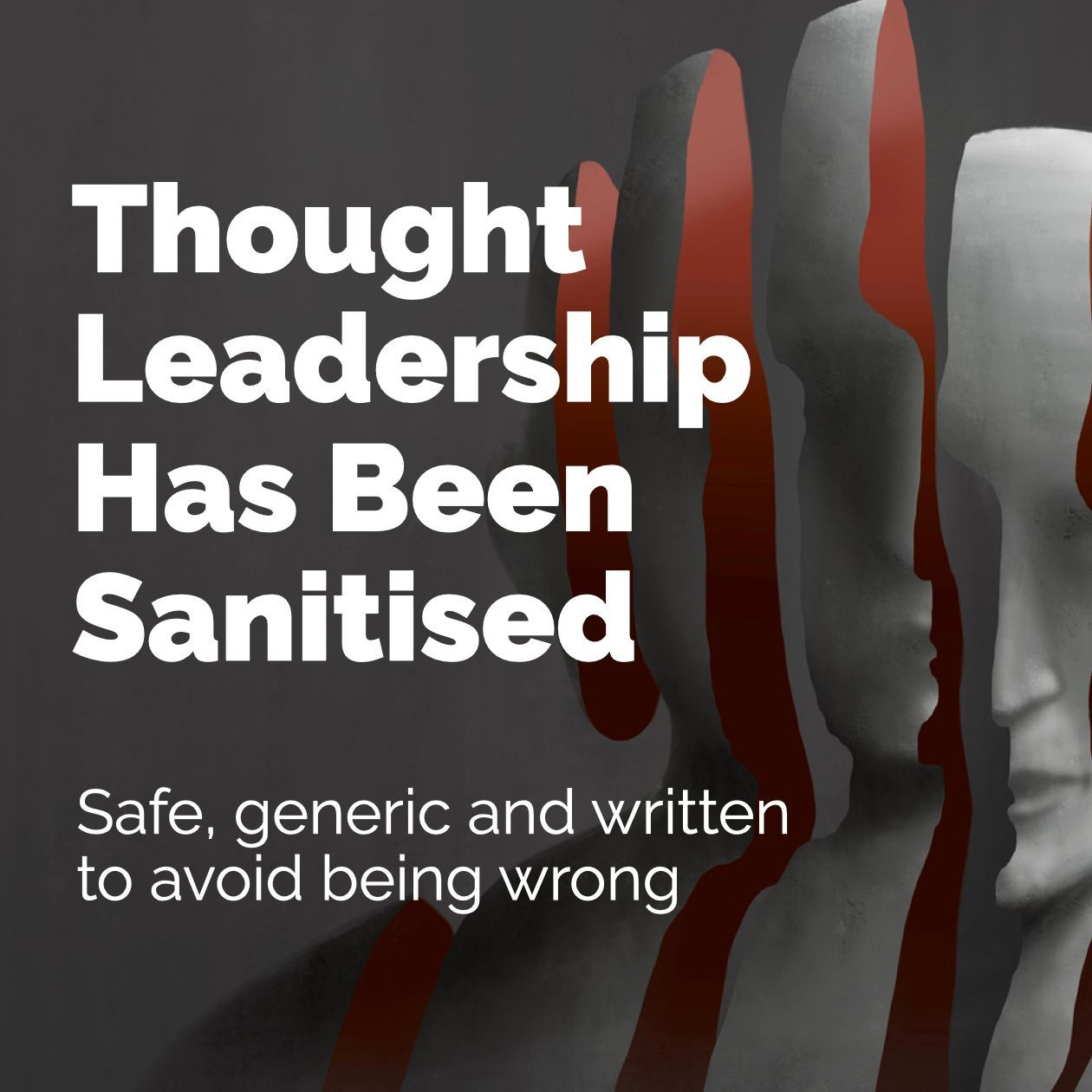
It seems like everyone is doing thought leadership, but almost nobody is doing it well. The problem Most thought leadership is safe, generic and written to avoid being wrong - which means it also risks being forgettable, ignorable and commercially ineffective. Why it fails Typically because it tries to appeal to everyone, and in doing so, it resonates with no one. What real thought leadership looks like It doesn’t explain the market, instead it challenges it …“This is wrong” or “This doesn’t work” or “This is where things are going”. And crucially, it’s backed by experience, not merely opinion. Good thought leadership doesn’t just build awareness, it shapes buying criteria, it influences decision-makers early and it creates preference before procurement even begins. If your content could be written by your competitors…is it still thought leadership?
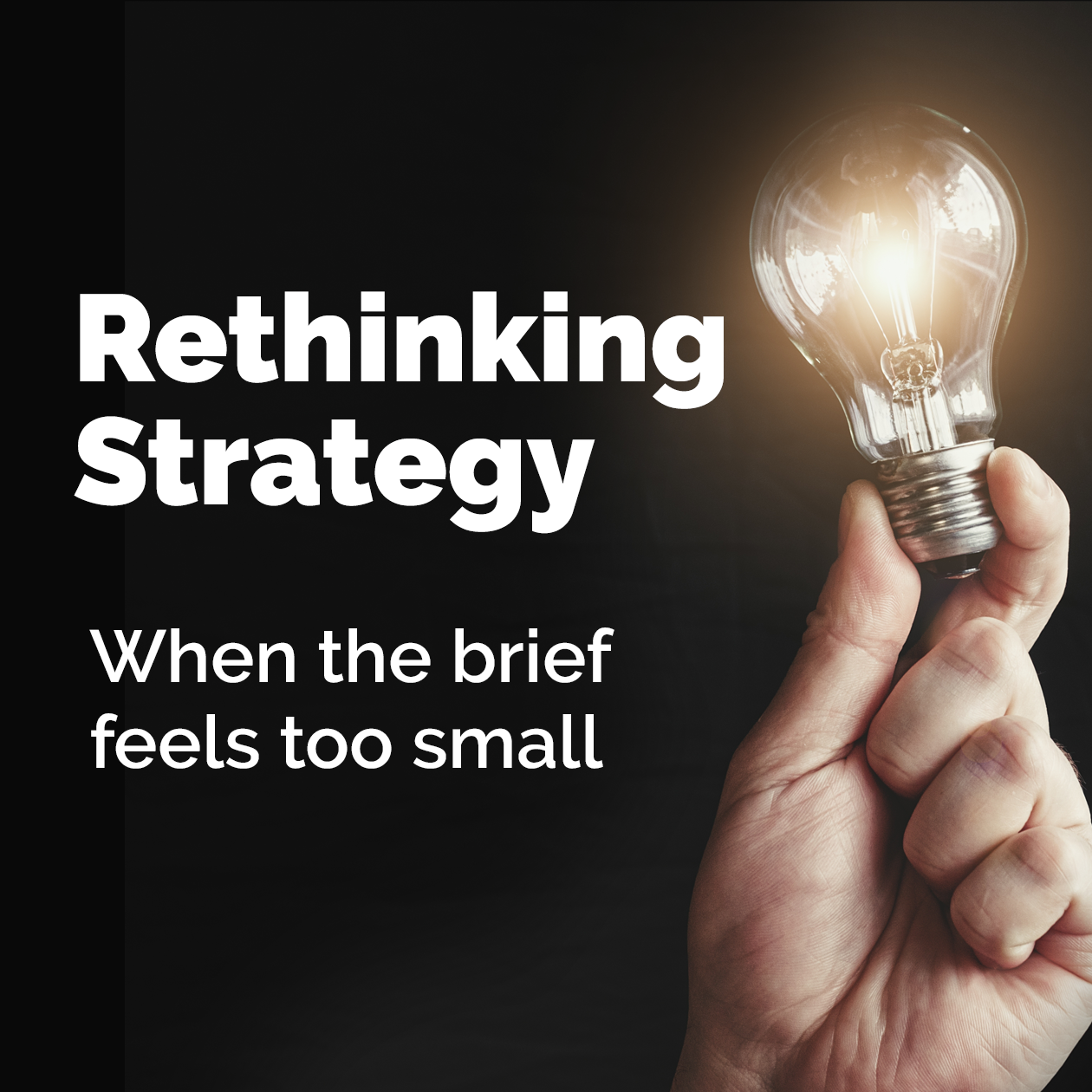
Rethinking Strategy When the Brief Feels Too Small Most strategy processes start by narrowing choices. There’s Option A (the obvious one), Option B (the brave one), and Option C (the safe compromise). But what if none of those answers are right? What if the real breakthrough lies in a Fourth Option — the one that’s not on the brief, not expected, and not obvious? At Three of Four, this idea is more than branding. It’s a mindset. It’s a call to think differently — not for the sake of novelty, but because innovation often lies just outside the field of accepted logic. When the Brief is the Problem Many organisations mistake structure for clarity. The brief says “increase awareness” or “target Gen Z” — goals that sound strategic but are actually tactical. Strategy needs more than a target and a metric. It needs tension, truth, and a willingness to step outside the frame. Every brief contains hidden assumptions. They often take the form of inherited wisdom or business-as-usual behaviours that no one has questioned in years. That’s where the problem lies — and the opportunity begins. Too many teams conflate a well-written brief with a well-defined problem. But what happens when the brief itself is the problem? It’s like being asked to optimise the steering wheel on a car with no engine. The Case for Stepping Sideways One of the most powerful questions in strategy is: what’s the question behind the question? In one recent project, a client asked for a customer acquisition strategy. The budget was tight. The brief was focused. But as we explored their proposition, a different opportunity emerged: the real issue was churn. The problem wasn’t new customers. It was losing the ones they already had. That Fourth Option — retention as acquisition — transformed both the commercial result and the creative solution. A sideways step in thinking unlocked a completely new lens for growth. Instead of buying more attention, we doubled down on value delivery and brand experience. The results: reduced acquisition costs, increased customer lifetime value, and a richer, more distinctive brand narrative. Thinking Outside the Frame — Not Just Outside the Box The Fourth Option isn’t always radically different. Sometimes, it’s subtly reframed. It’s the same data viewed through a different lens. It’s the same market approached with a different intent. And it’s almost always the option that makes the client feel slightly uncomfortable — but also excited. Fourth Options often require courage. They can involve: Challenging boardroom assumptions Rewriting KPIs that no longer serve the business Designing creative not around demographics, but around behavioural intent They’re less about disruption, and more about elevation — taking a problem and giving it a wider horizon. Give Yourself Permission to Reframe The Fourth Option is often the most useful because it reframes the problem. It’s not about being clever. It’s about being generous with your thinking. It asks: Are we solving the right problem? Have we accepted a false trade-off? Is there a longer, more valuable game to play? What happens if we say “yes” to something that wasn’t even on the table? The goal isn’t to reject structure or ignore briefs. It’s to treat every brief as a hypothesis — something to be tested, not blindly obeyed. That’s where real strategic value emerges. Final Thought When a brief feels too small, it probably is. Don’t choose between three imperfect options. Go looking for the fourth. Because that’s often where the real brand transformation begins.

The asset creation industry is being redefined by automation. Explore automation vs. the human touch
The Operational Edge: How brilliant systems—not just brilliant ideas—are transforming agency success.
The role of Marketing is shifting from interruption to integration.